
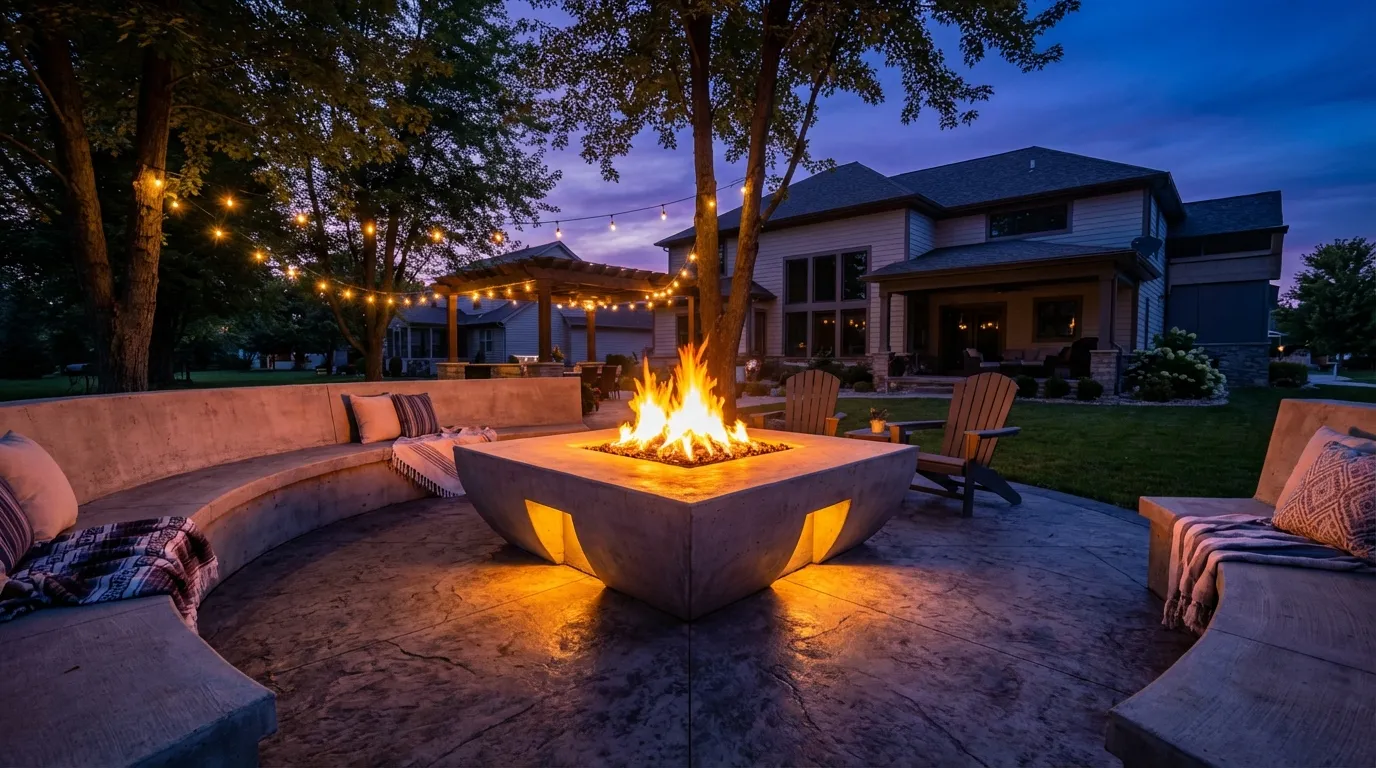
Concrete Fire Pits & Outdoor Features
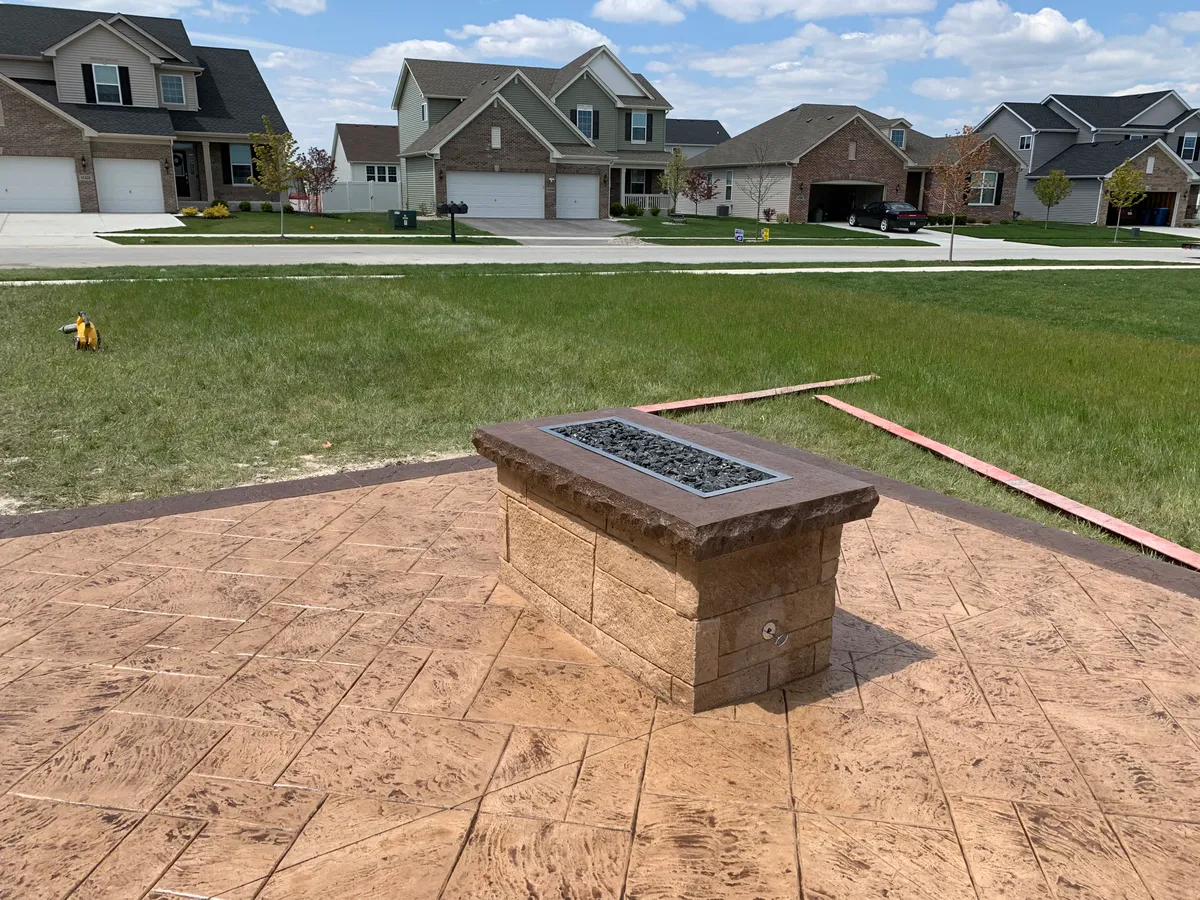
A backyard fire pit gives you a reason to stay outside long after the sun goes down. When it is built into a concrete patio, the fire pit becomes a permanent part of the outdoor living space — not a portable ring sitting on grass.
28
Years Experience
3
Fire Pit Styles
36"
Footing Depth
Fire Pit Options We Build
Not every fire pit works in every yard. The right choice depends on your patio layout, how you plan to use the space, and whether you want gas or wood-burning.
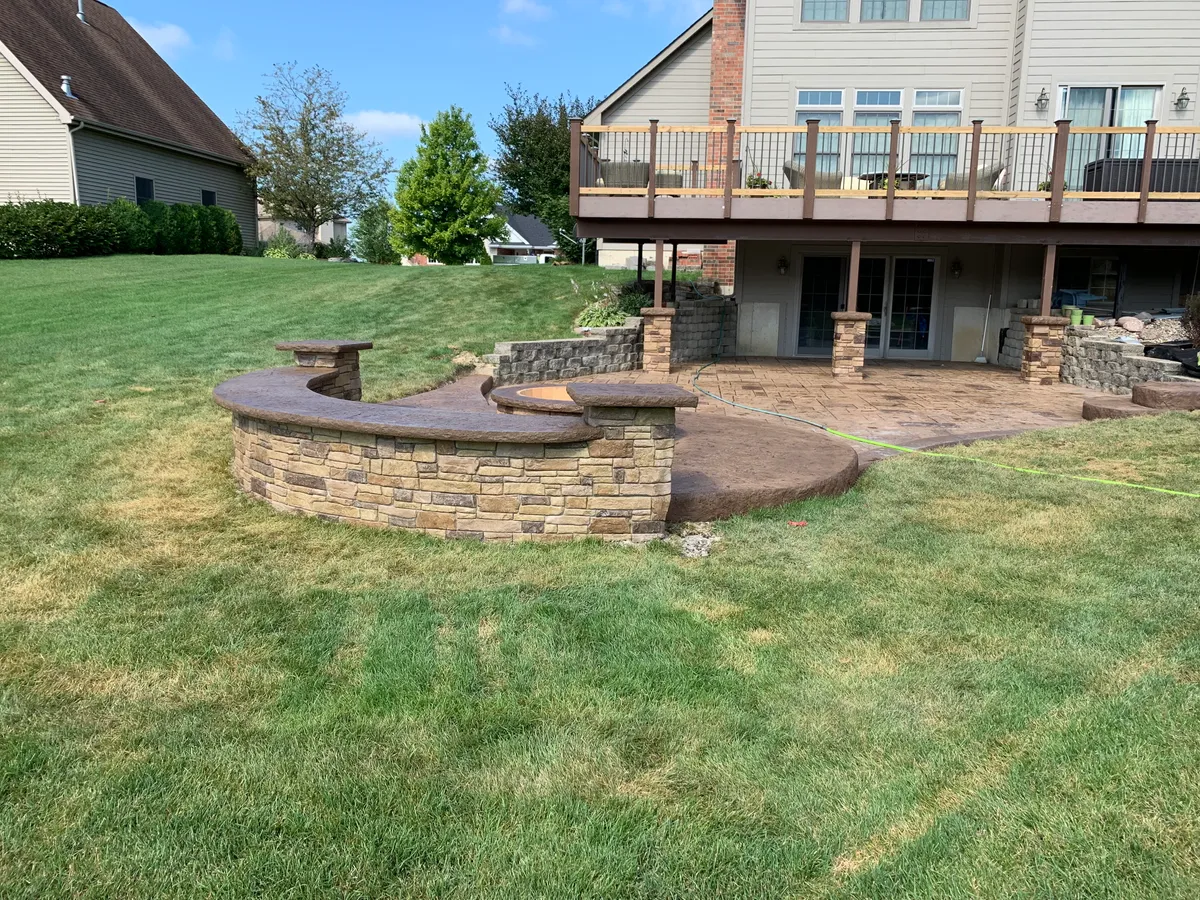
Built Into the Patio
Integrated Fire Pits
Poured and formed at the same time as your patio slab. The fire pit sits flush with or slightly above the patio surface, with the concrete surround matching the finish exactly. No seams, no separate foundation, no material mismatch.
We pour the fire pit footing and patio as one continuous project — one mobilization, one pour day, and one curing timeline. For homeowners adding a fire pit to a new patio installation, this is the most cost-effective approach.
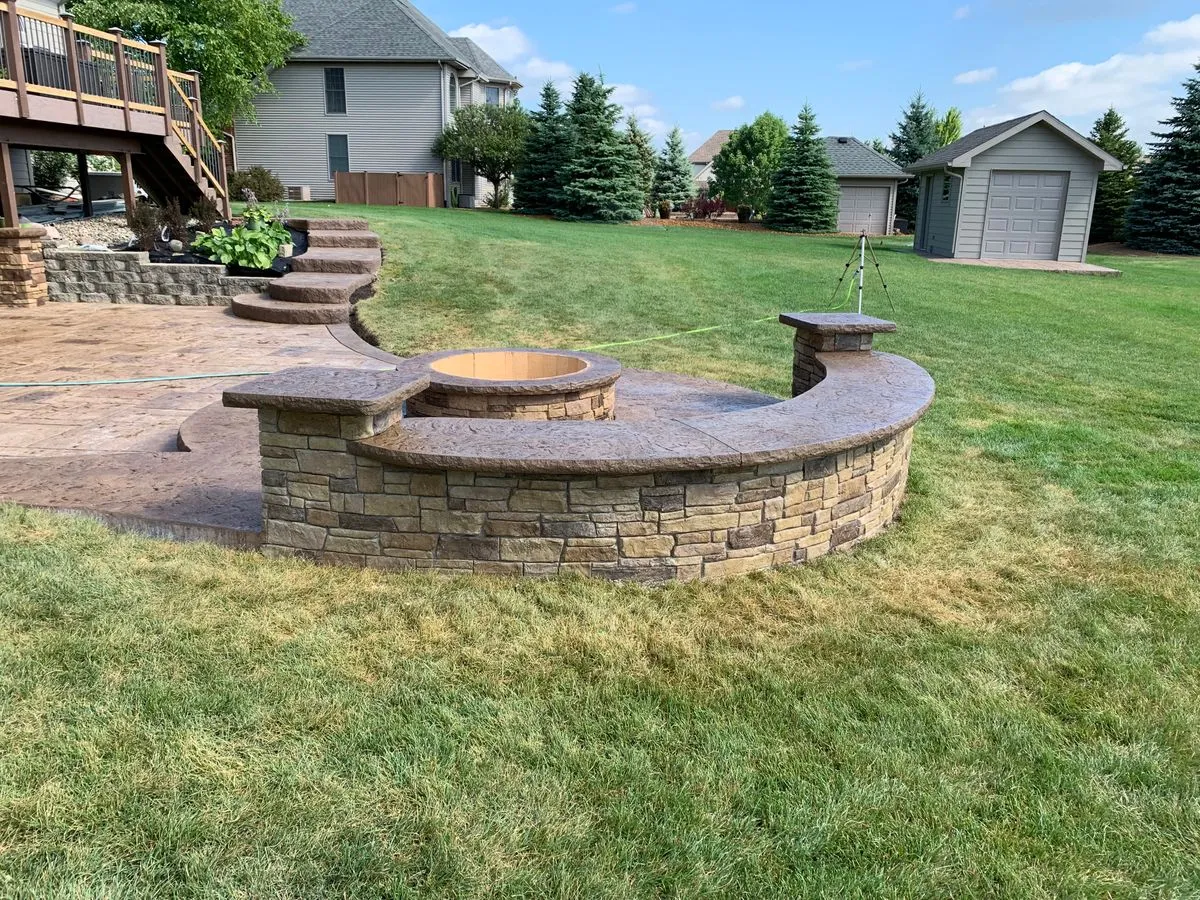
For Standalone or Prefab Inserts
Fire Pit Surrounds
If you already have a standalone fire pit or want a prefabricated insert, we build the concrete surround and pad for it. The surround protects surfaces from heat and provides a finished look with a flat, stable area for seating.
Surrounds work well on existing patios or as a standalone yard feature. We pour a reinforced pad underneath and form the surround to match your chosen shape — circular, square, or rectangular.
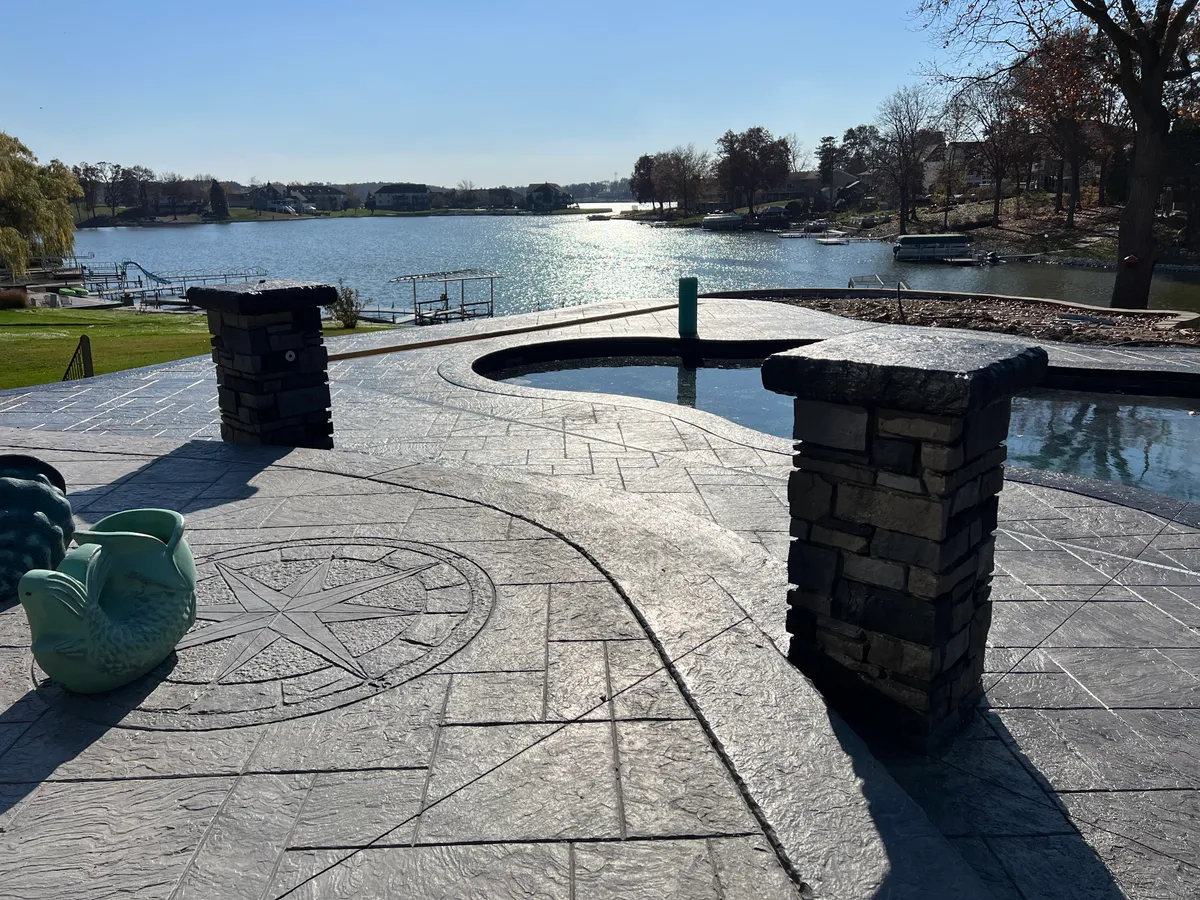
Built-In Seating Centerpiece
Seating Walls with Fire Pit
A built-in seating wall curves around the fire pit, giving guests a place to sit without dragging chairs across the patio. The wall footing and cap are poured at the same time as the fire pit base.
Seating walls stand 18-20 inches tall (comfortable sitting height) and 12-16 inches deep. The concrete core provides structural strength, while the facing material — stone veneer or stamped texture — ties into the rest of your outdoor space.
Design & Material Choices
Every fire pit project starts with two decisions: shape and fuel source. From there, the decorative finish ties the feature into your patio design.
Shape Options
Circular
Most popular — equal seating distance on all sides
Square / Rectangular
Works better against a wall or patio edge
Custom Shapes
Follow curved seating walls or fit odd spaces
Fuel Source
Wood-Burning
Pros: Real crackle and campfire smell. Traditional family experience.
Note: Requires deeper fire bowl, proper ventilation clearance, and firewood storage.
Gas (Natural Gas or Propane)
Pros: Lights with a switch, no smoke, instant shutoff, adjustable flame height.
Note: Requires a gas line run to the fire pit location (plumber coordination).
Decorative Finishes
- Stone veneer facing for a natural stone look
- Stamped concrete surrounds matching your patio pattern
- Colored or stained concrete for a subtle custom look
- Exposed aggregate for texture contrast
Our 4-person crew handles all concrete work, forming, and finishing. We coordinate with your gas plumber if you choose a gas-burning setup.
Outdoor Kitchen Foundations & Backyard Features
Fire pits are the most requested outdoor feature, but they are not the only one. We pour concrete foundations and structural bases for several other backyard upgrades.
Outdoor Kitchen Pads
A grill island or outdoor kitchen needs a stable, level concrete pad and a reinforced base to support countertop weight. We pour the pad and form the base walls so your fabricator has a solid structure.
Retaining & Seat Walls
Low retaining walls (under 4 feet) define yard zones, hold back slopes, and double as seating. Reinforced footings poured below frost line — 36 inches deep in NW Indiana.
Walkway Connections
A fire pit area needs a path to get there. We pour connecting walkways that tie the fire pit to the main patio, house, or side gate.
Planter Borders & Raised Beds
Poured concrete borders around landscape beds create clean edges that never shift or rot like wood timbers.
Pro tip: If you are planning a larger backyard project, the most efficient approach is to pour all features during the same mobilization. One excavation, one base prep, one pour day.
1 Mobilization for All Features
What a Fire Pit Project Looks Like
Michael Simko visits your property before we quote anything. Here is what happens from that first visit through the finished fire pit.
Site Visit & Design
Michael visits your property to discuss placement, size, shape, and fuel source. He recommends positioning based on wind patterns, setback requirements, and space flow.
Written Estimate
You get a detailed quote covering excavation, base prep, forming, concrete, finishing, and any decorative work. No surprises.
Excavation & Base Prep
We dig below frost line (36 inches in NW Indiana) and lay compacted crushed stone for stability. If part of a new patio, all excavation happens at once.
Forming & Reinforcement
Forms are set for fire pit walls and seating walls. Rebar and wire mesh are placed. For gas fire pits, gas line conduit goes in before the pour.
Pour & Finish
We pour 4 inches of concrete for the patio surface and form the fire pit structure in the same session. Stamping, coloring, or veneer prep happens while the concrete is workable.
Curing & Sealing
Concrete cures for 7-10 days before sealer is applied. Stone veneer facing gets installed during the curing window. Once sealed, you are ready to use the space.
Typical Timeline
A fire pit added to a new patio project adds 1-2 days to the overall schedule. A standalone fire pit surround on an existing patio takes 2-3 working days.
Frequently Asked Questions
Common questions about concrete fire pits in Northwest Indiana.
How much does a concrete fire pit cost?
The cost of a concrete fire pit depends on the type (integrated, standalone surround, or with seating wall), the size, shape, and finish you choose. Integrated fire pits built into a new patio are the most cost-effective approach. Adding a seating wall increases the total based on length and facing material. These estimates cover concrete work, forming, and finishing. Gas line installation by a plumber is a separate cost. Contact us for a free quote tailored to your project.
Can you add a fire pit to an existing concrete patio?
Yes. We can cut into an existing slab to install a fire pit, or build a raised fire pit surround on top of the existing surface. The better option depends on the thickness and condition of your current patio. Michael will assess the slab during the site visit.
Wood-burning or gas: which is better?
It depends on how you plan to use it. Wood-burning gives you the full campfire experience but produces smoke and ash. Gas is cleaner, easier to start, and lets you control flame height. Most NW Indiana homeowners we work with choose gas for convenience, but wood-burning remains popular with families who want the traditional feel.
Do I need a permit for a backyard fire pit?
Most municipalities in Lake and Porter Counties allow residential fire pits, but rules vary. Dyer, St. John, Crown Point, and Valparaiso each have different setback and size requirements. We are familiar with local codes and will let you know what applies to your property during the site visit.
How far should a fire pit be from the house?
Most local codes require a minimum of 10 feet from any structure, including the house, garage, fence, and overhead branches. We factor setback requirements into the design layout so the fire pit ends up in a usable location that also meets code.
We serve homeowners in Dyer, St. John, Crown Point, Valparaiso, Schererville, Munster, Highland, Hobart, Portage, Merrillville, Cedar Lake, and across Northwest Indiana.
Ready to Build Your
Backyard Fire Pit?
Whether you are building a new patio with a built-in fire pit or adding a fire feature to an existing backyard, we will walk your property and give you a written quote. No pressure, no sales pitch.
Get Your Free Estimate
Tell us about your project and we will get back to you within 24 hours.
Get An Instant Quote