
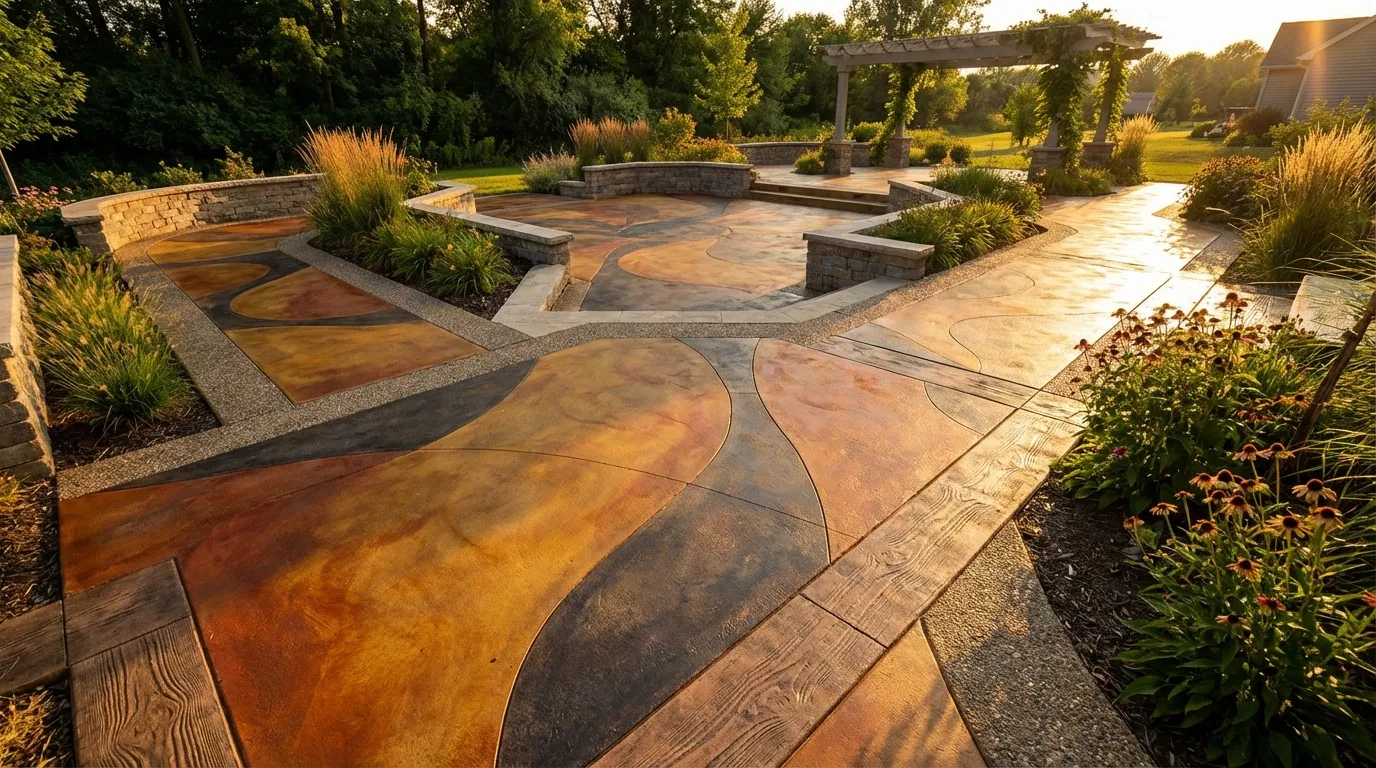
Decorative Concrete Finishes, Colors & Options for Every Project
Most homeowners know they want something better than plain gray concrete but have no idea what the options actually are. Stamped patterns, acid stains, exposed aggregate, colored concrete, scored designs, and more — we have spent 28 years mastering these finishes across Northwest Indiana.
7+
Finish Types
40+
Stamp Patterns
28
Years Experience
7 Types of Decorative Concrete Finishes
Some change the surface texture. Some change the color. Some do both. Here is a clear breakdown of each finish type so you can compare them side by side.
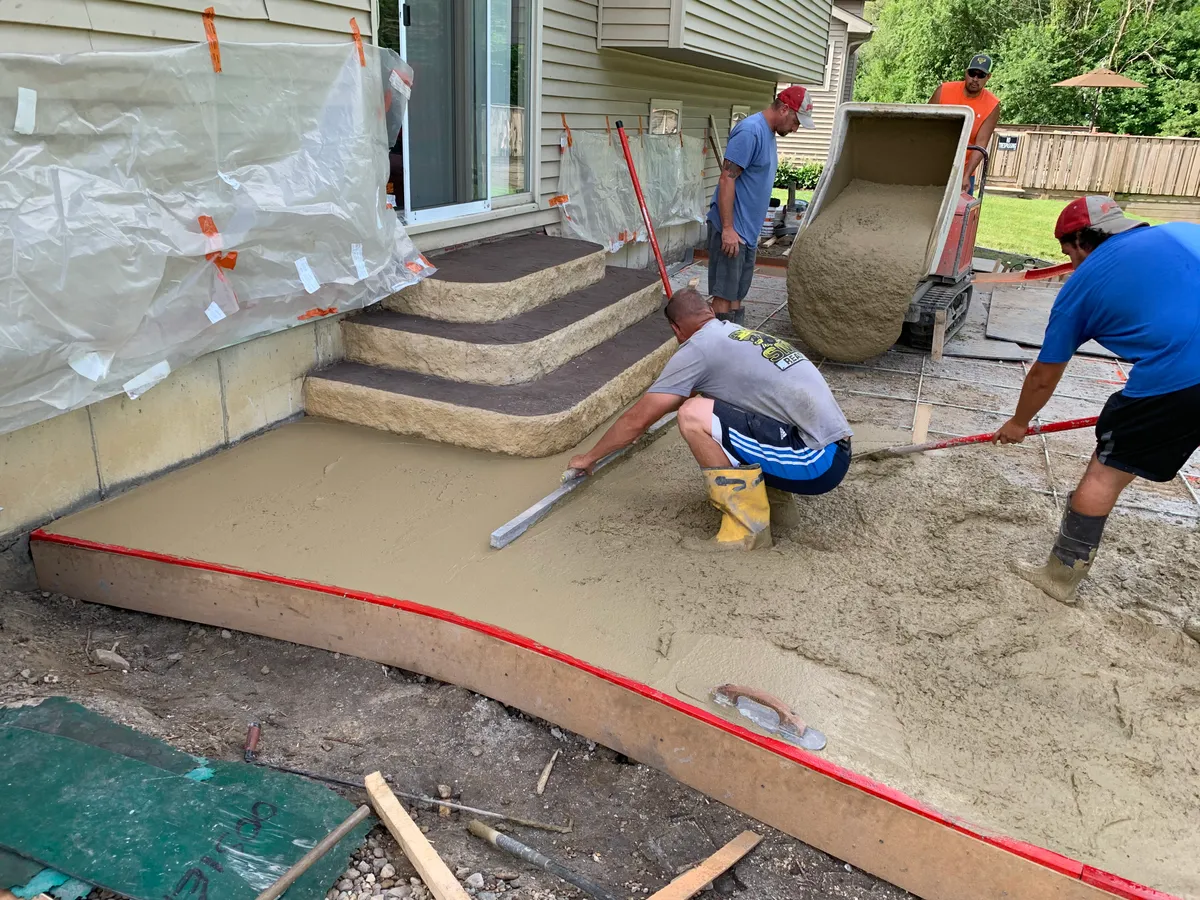
Stamped Concrete
Most Popular Decorative Finish
Large rubber mats cast from real stone, brick, or wood originals are pressed into freshly poured concrete to imprint a pattern. The surface is colored with integral pigment, color hardener, and accent release colors to replicate the look of natural materials.
Patterns / Options
Ashlar slate, random stone, cobblestone, flagstone, brick (herringbone, running bond, basketweave), wood plank, European fan, travertine, and 40+ more.
Best For
Patios, driveways, walkways, pool decks, entryways.
Why homeowners choose it: You get the appearance of hand-laid stone or brick in a single monolithic pour. No joints for weeds, no individual pieces shifting.
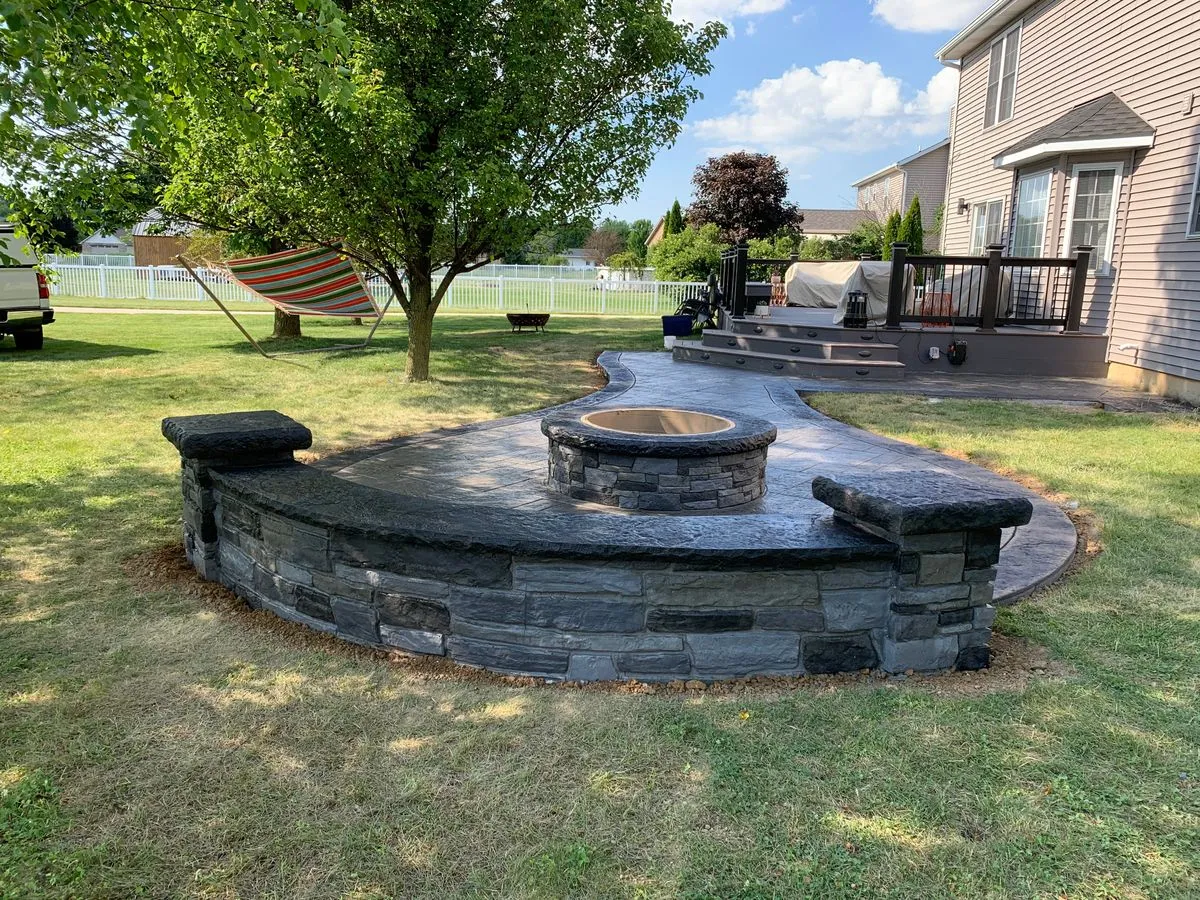
Stained Concrete
Rich Color, Unique Character
Stained concrete uses chemical reactions or pigment penetration to add color to a slab. Acid stains produce rich, translucent, mottled tones. Water-based stains offer a wider color palette with more predictable results.
Patterns / Options
Acid stain: ambers, browns, blue-blacks, greens. Water-based: blues, reds, and custom mixes.
Best For
Patio surfaces, walkways, garage floors, fire pit surrounds, accent borders on larger projects.
Why homeowners choose it: One of the most affordable ways to add color and character. The translucent, mottled look of acid stain gives a depth that paint cannot match.
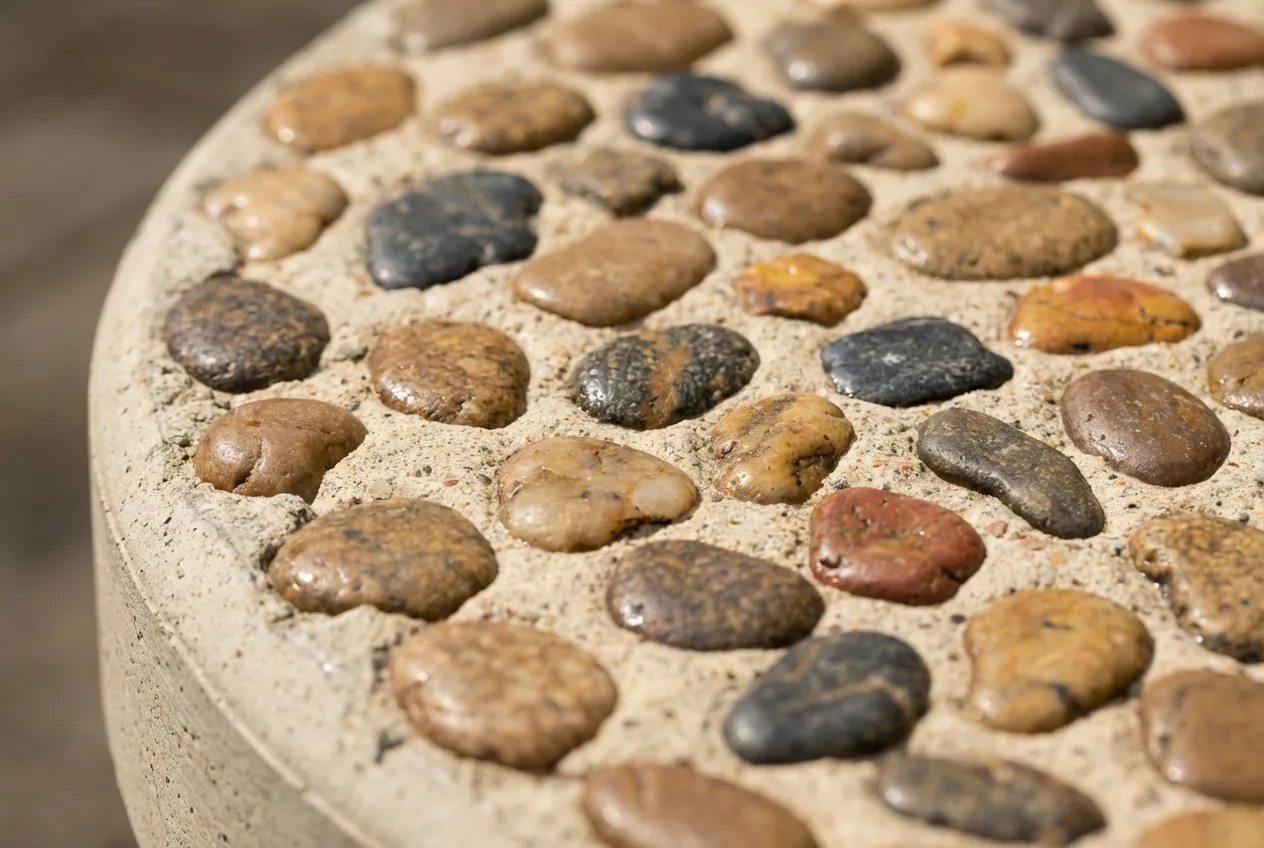
Exposed Aggregate
Natural Texture, Built-In Traction
The top layer of cement paste is removed to reveal the stones, pebbles, and sand embedded in the mix. Decorative stones like river pebbles, colored quartz, or granite chips can be seeded into the surface for a specific look.
Patterns / Options
Standard aggregate mix, river pebbles, colored quartz, granite chips, custom stone blends.
Best For
Driveways, walkways, pool decks, and any surface where slip resistance matters.
Why homeowners choose it: Durable, low-maintenance, and has a natural look that blends with landscaping. Handles Indiana's freeze-thaw cycles well because the textured surface lets water shed rather than pool.
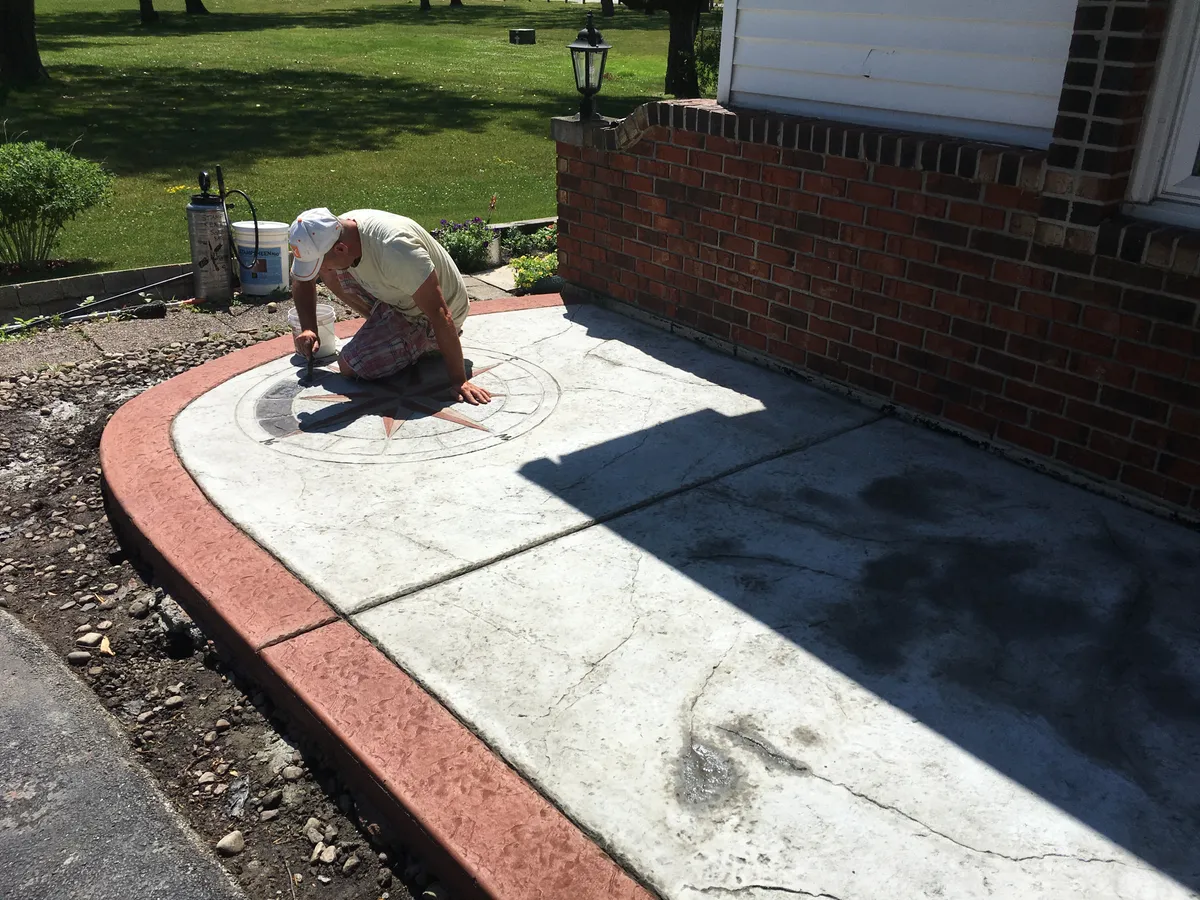
Colored Concrete
Color Through the Full Depth
Iron oxide pigments are blended into the concrete before pouring, coloring the entire slab all the way through. If the surface chips or wears years later, the color underneath matches.
Patterns / Options
Earth tones (tans, buffs, browns, terracotta, grays), slate blues, greens, and custom-matched shades.
Best For
Any concrete surface. Often used as the base layer for stamped or scored concrete, but also stands alone with a broom or smooth trowel finish.
Why homeowners choose it: Permanent color that goes through the full depth. Unlike surface-applied coatings that can peel or chip, integral color adds visual appeal without adding complexity.
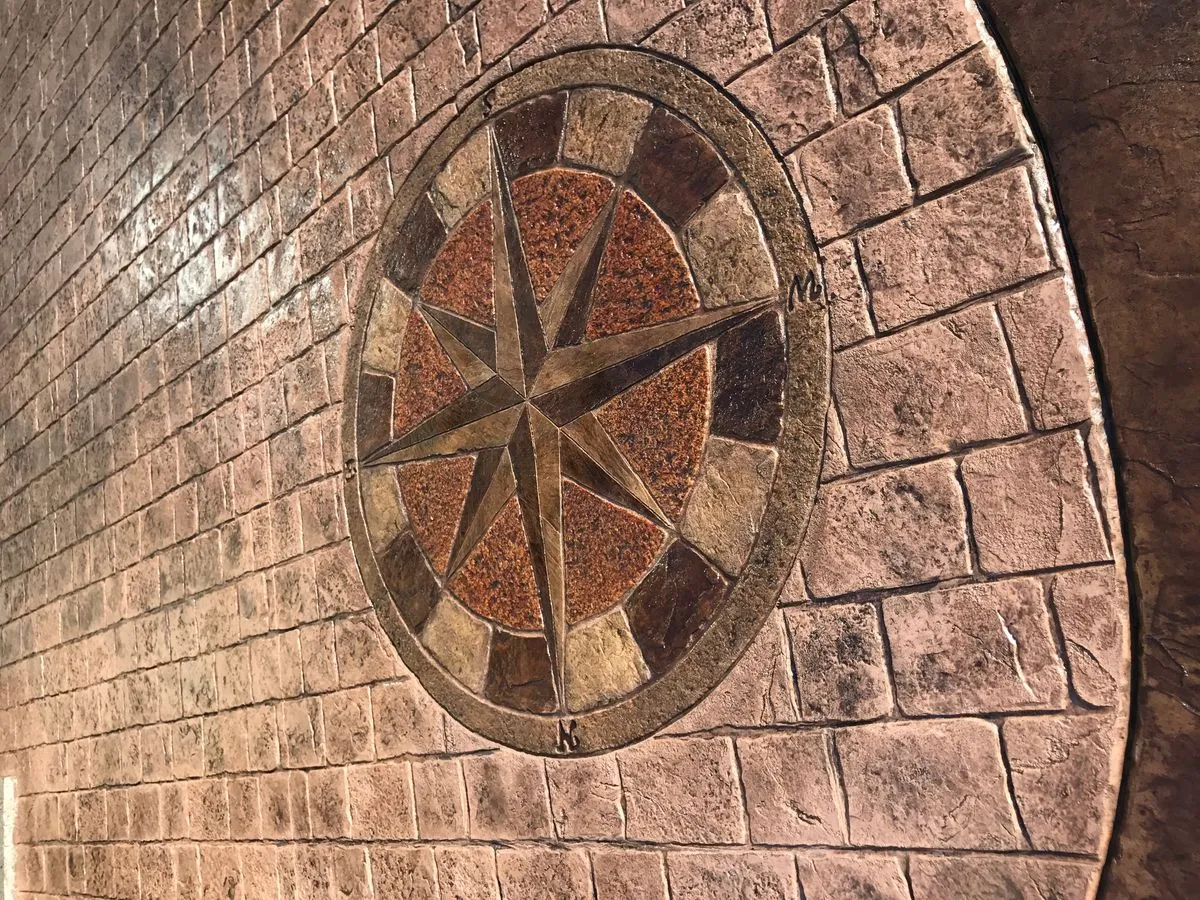
Scored (Engraved) Concrete
Clean Lines, Modern Look
Shallow grooves are cut into the concrete surface to create geometric patterns, tile grids, borders, or custom designs. Grooves can be left natural or filled with a contrasting color.
Patterns / Options
Diamond grids, brick layouts, tile patterns, compass rose designs, freeform curves, custom logos.
Best For
Entryways, patios, walkways, and any surface where you want a geometric or architectural look. Works on existing concrete.
Why homeowners choose it: Clean and modern. Works well on colored concrete to define zones within a patio or to add a border detail. Subtle from a distance but adds structured visual interest up close.
Textured Finishes
Subtle Elegance Without the Pattern
A texture skin (large, seamless rubber mat) is pressed into the surface to add a subtle stone or leather-like texture without imprinting a defined pattern. Natural-looking variation that does not replicate a specific material.
Patterns / Options
Light sandstone, heavy slate, leather, rock salt (dimpled), and seamless stone.
Best For
Borders and accent bands, pool decks, and projects where you want something more refined than broom finish but less busy than full stamping.
Why homeowners choose it: Adds visual and tactile interest at a lower cost than patterned stamping. Often used as textured borders around stamped patio fields.
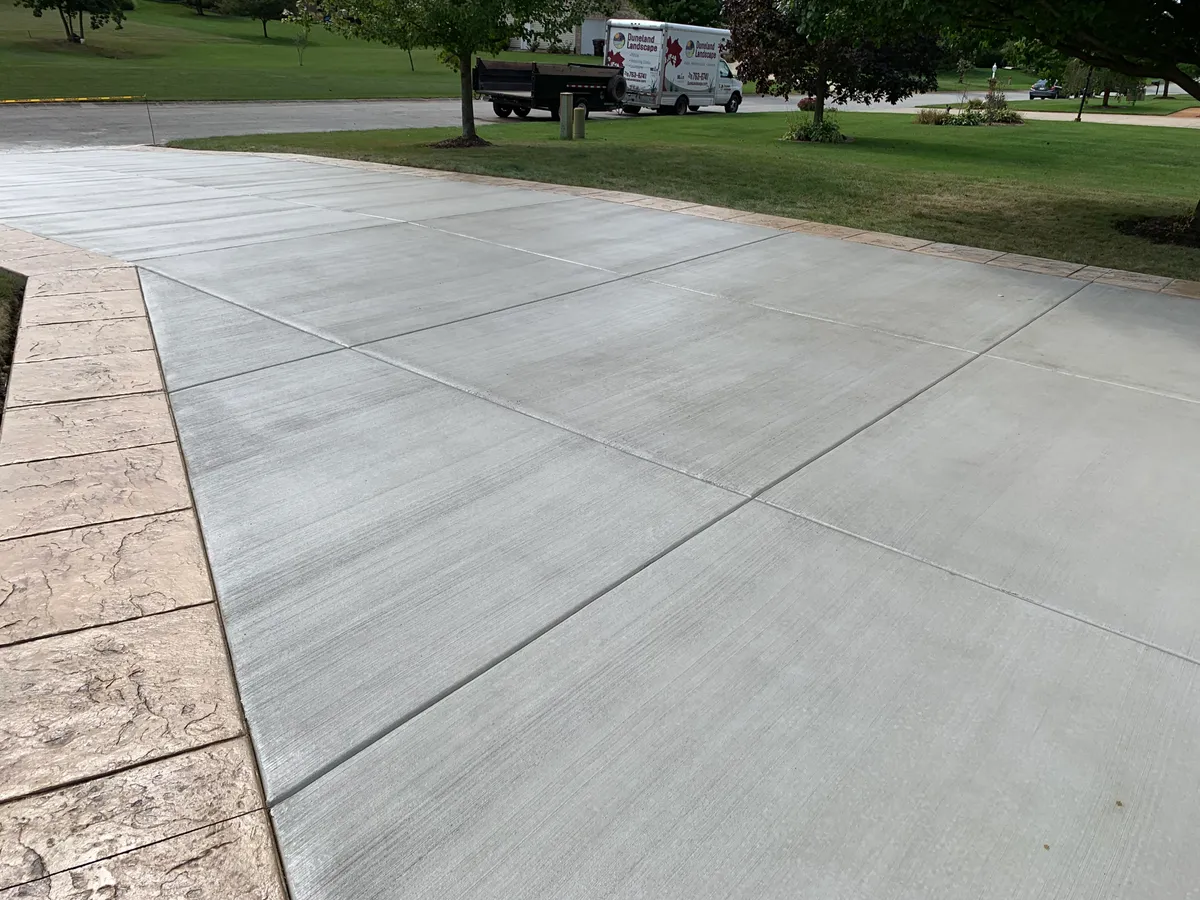
Broom Finish
The Reliable Baseline
A stiff broom is dragged across wet concrete to create parallel grooves that add slip resistance and a clean, utilitarian look. Can be paired with integral coloring, saw-cut patterns, or decorative borders for more polish.
Patterns / Options
Standard broom, fine broom, heavy broom; combine with color and score patterns.
Best For
Driveways, sidewalks, utility areas, and anywhere function is the priority. Also useful as a contrasting band alongside stamped or colored sections.
Why homeowners choose it: The most economical finish that still looks intentional. Combined with integral color, it transforms a slab for minimal additional cost.
Where Decorative Concrete Works Best
Different finishes suit different parts of your property. Here is how homeowners across NW Indiana typically use decorative concrete, based on what our crew installs most often.
Patios & Outdoor Living
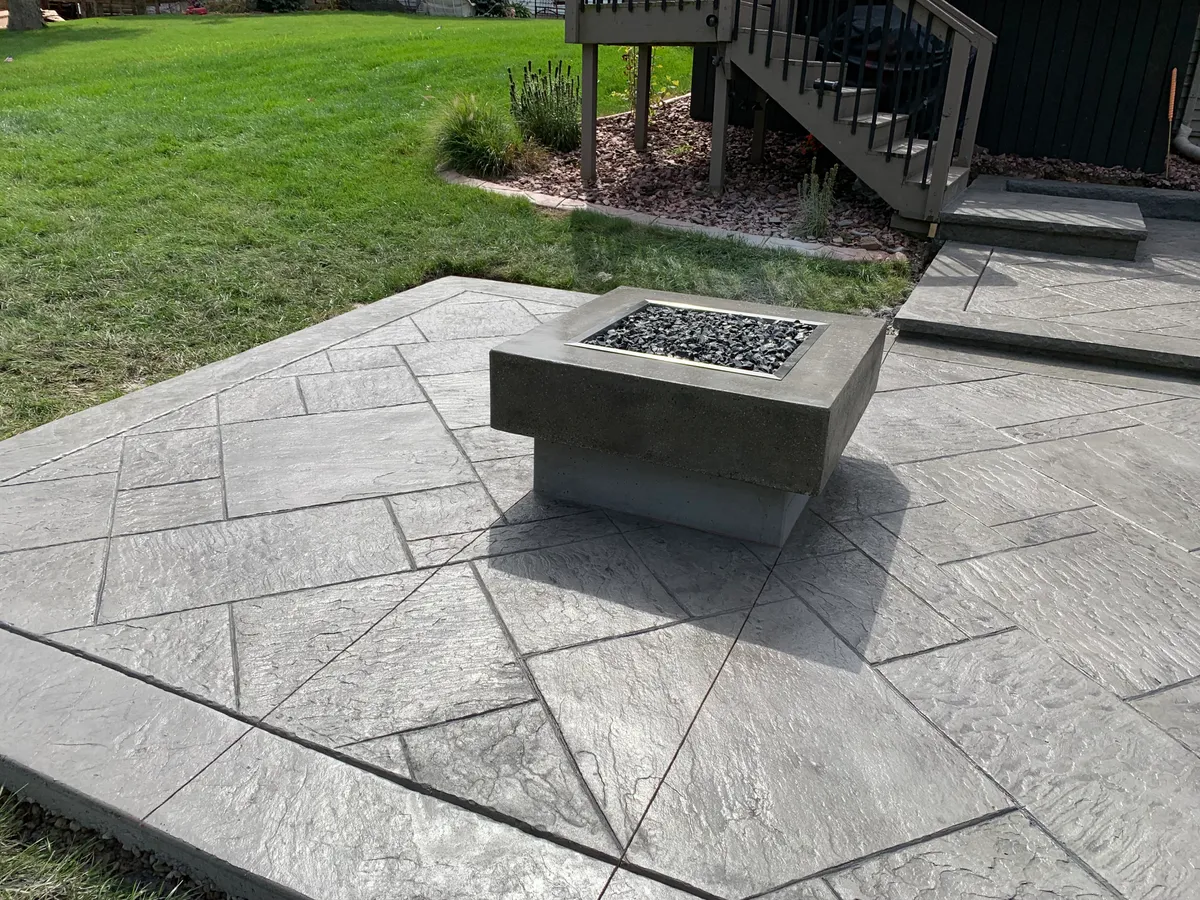
A 300-500 sq ft patio with stamped ashlar slate in warm tan with charcoal accents transforms a backyard. Multi-zone patios use a stamped field, textured border, and broom-finish step-down.
Patio OptionsDriveways
Full stamped driveways in cobblestone or herringbone brick make a statement. For tighter budgets, a broom-finish driveway with a stamped or stained border delivers curb appeal at lower cost.
Driveway OptionsWalkways & Entryways
Stamped flagstone walkways or scored paths with colored accents tie your hardscape together. Front entryways benefit most from decorative treatment as the first surface visitors step on.
Fire Pit Surrounds
Non-combustible, heat-tolerant surface with stamped stone pattern or exposed aggregate. Fire pit pads framed with a contrasting border pattern create a defined seating zone.
Steps & Retaining Walls
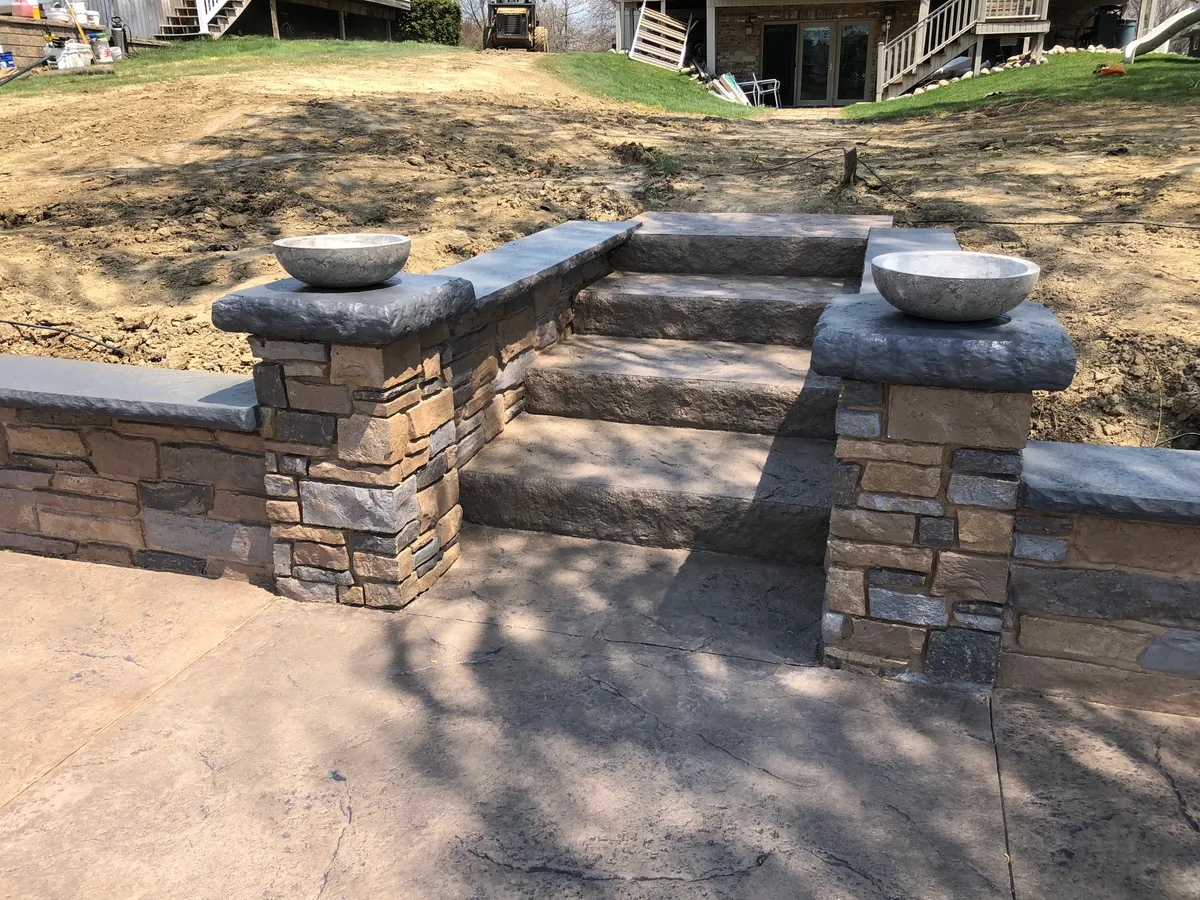
Stamped and colored steps that match your patio or walkway create a seamless transition. No more plain gray steps connecting a raised patio to the yard.
Michael builds all patios with 4-inch slabs reinforced with fiber mesh, preventing the cracking issues that thinner pours develop after a few Indiana winters. Driveways get 5-6 inch reinforced slabs for vehicle traffic.
How to Choose the Right Decorative Finish
With seven finish types and dozens of combinations, narrowing down your choice comes down to four factors.
Start with Your Budget
For maximum visual impact per dollar, stamped concrete with a simple pattern (ashlar slate in one or two colors) gives the most dramatic upgrade at a mid-range price. If budget is tight, integral colored concrete with a broom finish and a scored border still transforms a slab for just a few dollars more per square foot.
Consider Your Home's Style
Traditional/colonial: Brick-pattern stamps, cobblestone
Modern/contemporary: Scored geometric, smooth colored, seamless textures
Rustic/farmhouse: Exposed aggregate, flagstone stamps, acid stain
Craftsman: Ashlar slate, earth-tone color palettes
Think About Maintenance
Every decorative finish above broom-finish requires periodic resealing (every 2-3 years). If you want a “pour it and forget it” surface, colored broom finish or exposed aggregate require the least ongoing attention. Stamped and stained surfaces need regular resealing but reward that effort with bolder aesthetics.
Combine Finishes
Stamped ashlar slate patio + textured border + broom-finish step-down
Colored driveway + stamped cobblestone apron + acid-stained accents
Exposed aggregate pool deck + stamped coping borders
Michael brings pattern samples and color boards to your property so you can see how each option looks against your home before committing.
Frequently Asked Questions
Common questions about decorative concrete finishes, maintenance, durability, and what to expect for your project.
Have a specific question?
Every project is different. Call us or request a free consultation for answers tailored to your property.
(219) 712-35081What is decorative concrete?
Decorative concrete is any concrete finish that goes beyond a standard gray, broom-finished slab. It includes stamped patterns, integral coloring, acid staining, exposed aggregate, scoring, and textured skins. These techniques change the concrete's appearance, color, texture, or all three.
2How long does decorative concrete last?
With proper installation and periodic resealing, decorative concrete lasts 20-25 years or more. The slab itself lasts decades. The decorative finish stays sharp as long as the surface is maintained. In NW Indiana, resealing every 2-3 years protects against freeze-thaw damage, UV fading, and salt exposure.
3Can decorative concrete be applied to existing slabs?
It depends on the finish. Acid staining and scoring both work on existing concrete that is structurally sound. Stamped overlays can work in some cases, though a fresh pour produces better pattern definition. Michael evaluates existing slabs on-site to recommend the best approach.
4Is decorative concrete slippery?
Textured finishes (stamped, exposed aggregate, broom finish) provide natural traction. Smooth, sealed surfaces can be slippery when wet, which is why we add non-skid additives to sealer on pool decks, sloped walkways, and any surface where wet footing is a concern.
5What is the difference between stamped and stained concrete?
Stamped concrete changes both the texture and color of the surface. Patterns are physically pressed into wet concrete, creating three-dimensional texture. Stained concrete changes only the color, using acid or water-based stains to penetrate the surface. Many projects combine both: a stamped field with stained accent borders.
6Does decorative concrete crack?
All concrete can crack. Proper installation, including 4-inch minimum thickness, fiber mesh reinforcement, and control joints at the right intervals, minimizes cracking. We hide control joints within stamp pattern lines so that if a crack develops, it follows the joint rather than running across the design.
“We were not sure which finish to pick but Michael brought samples to our house and walked us through every option. The stamped patio with the textured border turned out even better than we imagined. Worth every penny.”
Not Sure Which Finish
Is Right for Your Project?
That is exactly what the consultation is for. Michael Simko brings pattern samples, color boards, and texture examples to your home so you can see each option against your house, your yard, and your budget before making any decisions.
Get Your Free Estimate
Tell us about your project and we will get back to you within 24 hours.
Get An Instant Quote